同床异梦
Inside Asia’s oldest private library, guarding ancient scrolls in the age of AI_我的网站

一 |
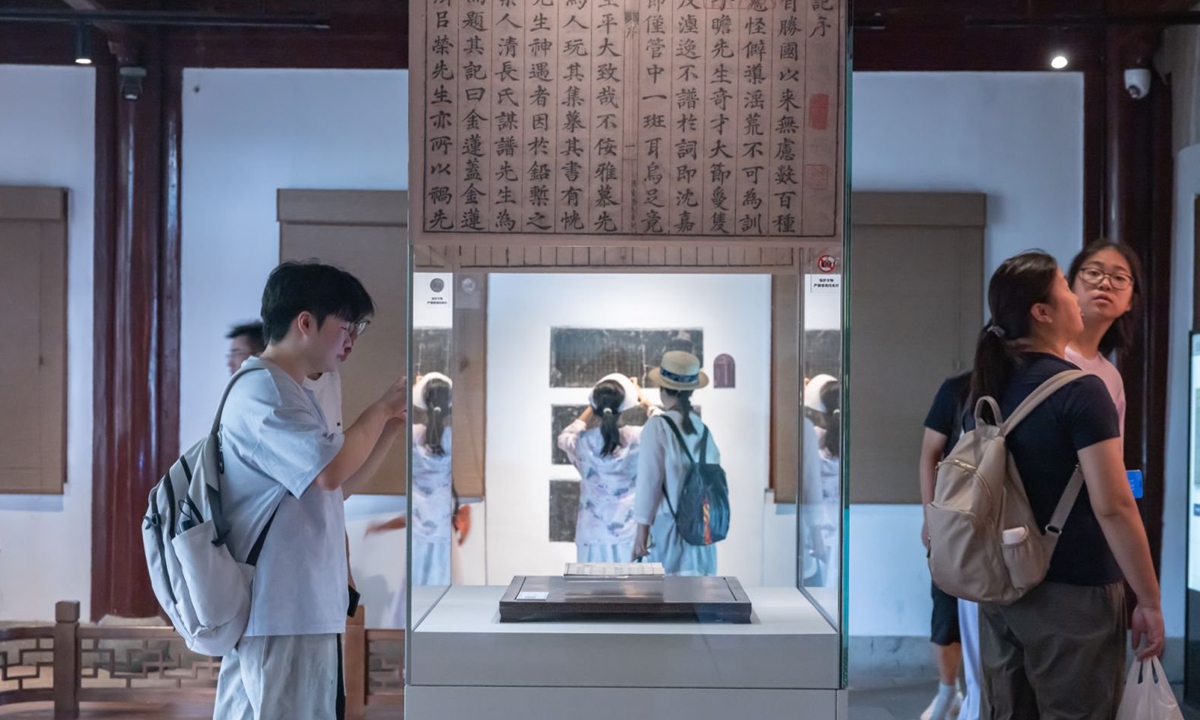
Visitors view ancient documents at Tianyige Museum. Photo: Courtesy of Tianyige Museum
Huang Gang is in his fifties. Every day, he sits before a computer screen at Tianyige Museum (Tianyige), flipping through ancient books - digitally.
As director of the information technology department at Tianyige Museum in Ningbo, East China's Zhejiang Province, home to Asia's oldest surviving private library and one of the world's three oldest remaining family-run libraries, his job title may seem far removed from old books. Yet his work centers on them: converting brittle, thread-bound antique volumes into searchable, zoomable digital files accessible on screen.
For years, Tianyige has carried out digitization in batches guided by its mission: rescue-oriented preservation, scholarly organization and public-oriented outreach. Its teams have scanned more than 3.4 million pages of ancient texts. The institution rolled out its Ancient‑Book Digital Service Platform back in 2009. By 2025, the platform had drawn over 4.6 million total visits.
To outsiders, this might look like a headlong rush into digitization. For Huang and his colleagues, it is delicate work balanced between fast‑evolving artificial intelligence models and the reverence owed to fragile paper relics. "Technology is a tool, ancient books are artifacts, and reading is the ultimate purpose," Huang told the Global Times.
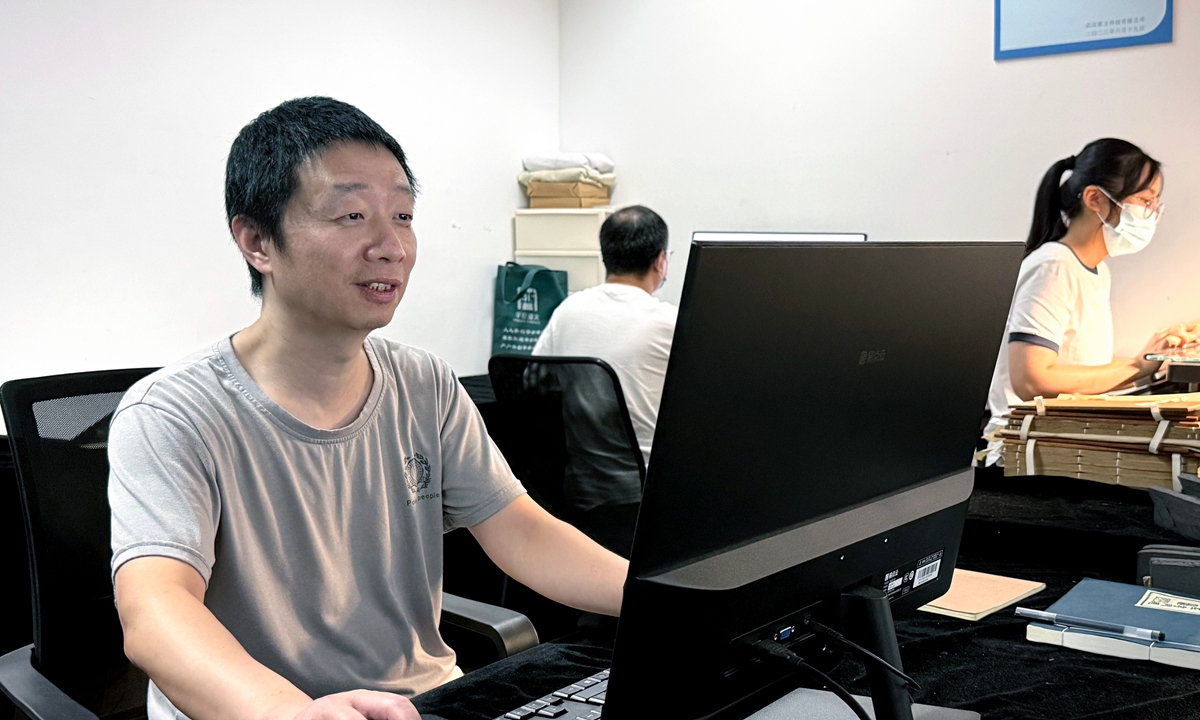
Huang Gang, director of the information technology department of Tianyige Museum, works on the digitization of ancient books. Photo: Courtesy of Tianyige Museum
Beyond tech boundariesDeep in the storage vaults of Tianyige, tens of thousands of ancient volumes rest in silence. Some pages are curled and fragile; others bear faded script -the accumulated marks of centuries. Vulnerable to aging, wear and external damage, these precious paper relics can hardly sustain long-term repeated manual consultation, making digital preservation an indispensable way to inherit ancient book resources.
Huang's daily work involves leading his team in the digitization of the library's entire collection of ancient books, paintings and cultural relics, bringing rare treasures out of the shadows and into public view.
AI now serves as a core auxiliary tool for ancient-book digitization and research. Huang's group initially built character-recognition frameworks based on optical-character-recognition technology. By cross-checking outputs across different models, ancient Chinese characters, damaged script and blurry handwriting.
According to Zhejiang Daily, by August 2025, the Tianyige's digital platform had added over 3,700 new digitized book sets, lifting its total digital holdings past 20,000 volumes.
Digitization is never a purely technical exercise; in-depth scholarly expertise in ancient texts remains indispensable. Huang frequently collaborates with Zhao Xuteng, a museum librarian specializing in classical literature. Zhao is responsible for selecting which volumes to digitize, evaluating editions, studying content, and identifying works of significant academic or public value. While one team focuses on the technical execution, another digs deep into the textual substance, ensuring that cold digital capture remains faithful to the historical and bibliographic logic of the originals.
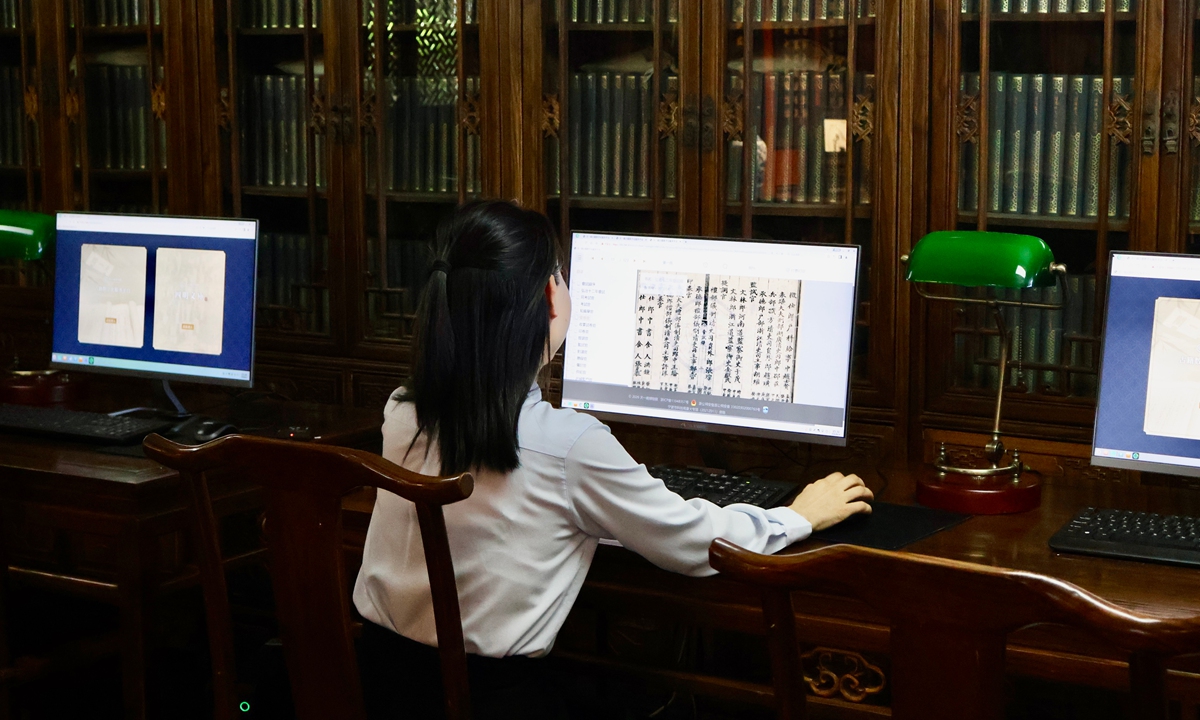
A staff member of Tianyige Museum view digital resources of ancient documents in the museum's ancient book reading room, on August 18, 2026. Photo: Lin Xiaoyi/GT
Staying true to readingWhen he is not writing code, Huang keeps asking one fundamental question: What should technology actually do for people? "All technology ultimately serves the act of reading itself," he said. "It can never replace that."
With the rapid rise of large language models, demand for high-quality text corpora has surged. Overseas, some AI companies have reportedly purchased millions of printed books in bulk, scanned them and then shredded the originals.
"Machines can efficiently compile documents, retrieve sources and generate explanatory notes. Real engagement with ancient texts, however, is far more than mechanical assembly of characters," Huang noted.
Both Huang and Zhao stressed that human beings sit at the heart of cultural inheritance. People absorb wisdom from old texts, draw on personal experience and scholarship to reflect, and produce new knowledge - an intellectual process no AI can fully replicate.
The Global Times learned that every digitization workflow at Tianyige follows strict closed-loop protocols: collection checkout logging, noncontact scanning, AI-powered quality checks, precise image stitching and compliant online publication. The full procedure minimizes physical wear on original artifacts.
"A book is, first and foremost, a cultural relic that carries a thousand-year legacy," Huang said. "Only secondarily is it a text to be read." That principle, he added, is shared by all guardians at Tianyige.
"Media change, technologies evolve, but the essence of reading has never changed," he stressed.
Today, drawing on its comprehensive digital collections, Tianyige hosts monthly exhibitions of rare texts and organizes family reading events where parents and children explore the classics together. For Huang and his colleagues, the most gratifying reward is watching more and more ordinary people develop a love for ancient reading and a deeper appreciation for the traditional Chinese culture.
In an era swept by artificial intelligence, Tianyige's guardians tend to fragile paper relics while leveraging modern technology, preserving the genuine power of reading. More than 450 years of scholarly heritage flows onward, passing between human fingertips and glowing digital screens.
。“边上的朋友,8K已经切了吗?”不,“走开!”这是今年CES 2019电视台的真实写照。虽然目前可用的8K资源非常少,但毕竟,“我不能用它,没有它你不能做”,我们2019年还没有开始8K。恐怕还不到一分钟就被击倒在地上。这就是为什么主要的电视制造商们在消费电子展(CES)上绞尽脑汁,出售他们的8K创意,这是2019年的第一个国际大型展会。~看看我的8K~每根头发的数目都很清楚。~lg:可以是8K,但是没有必要问lg在这么大的面板工厂里有没有8K。去年,它用88英寸8K OLED电视刷新了消费级8K电视的面板尺寸。但是,当CES 2019的帷幕拉开时,我们发现LG的主要特征不是8K电视。LG仍然熟悉底座,或者熟悉“滚动蛋糕”式的接收方式,去年在CES 2018上推出了卷曲的OLED电视,现在他们已经将电视的分辨率提高到4K级,这对于灵活的OLED面板来说是一个非常困难的任务。

二 | 同时,在基础上增加了更多的语音单元,开发了更多的半尾迹状态智能辅助系统。简而言之,这台电视机已经变得越来越成熟了,并与量产版无限接近。LG选择收看电视的原因很简单。毕竟,大多数人24小时都没有电视,这会导致我们房间的暗面板在电视闲置时变得模糊。所以,虽然这是一个老蛋糕,我们仍然需要说“真正的香味”,当我们看到LG卷曲的电视。

三 | 此外,LG表示,他们可以在今年第一季度完成这台卷曲电视机的生产。价格、尺寸和其他配置都会及时提供。虽然未来是模糊的,但它最终使我们心中的石头掉在地上。我们只是不知道LG的弯曲设计是不是。会影响未来家庭电视产品的设计趋势吗?索尼:孩子们做选择。成人都希望索尼有扩大消费电子展的习惯。

四 | 今年也不例外。它仍然是“最强的LCD”和“最强的OLED”的组合,加上8K属性。嗯,闻起来最香。索尼推出的液晶旗舰和OLED旗舰机型分别命名为索尼Z9G和索尼A9G。Z9G有85英寸和98英寸版本,而A9G有55英寸、65英寸和77英寸版本。这两款电视都配备了索尼HDR图像处理芯片x1旗舰版(处理器x1旗舰版),将在8K领域发挥全部作用。有效性,除了为8K提供独特的算法外,还可以智能检测屏幕,通过对图像的智能识别,实现对胶片纹理的有针对性的优化。然而,作为OLED电视,Z9G并没有继承前人的屏幕生成技术,而是采用多通道屏幕声场技术,通过内置四路前置扬声器,使电视的声音性能更加准确,就像屏幕声音技术一样,给用户一种声音涌出屏幕的感觉。然而,索尼已经选择了保持沉默的两台8K电视的价格,但考虑到索尼的习惯,他们不会在公司里隐藏这种问题太久,所以如果你想买一台新的索尼电视,你不妨等待。三星:我比去年的2018年IFA更老更强壮。三星表示,将于2018年10月推出一款8K Qled电视。当然,他们没有违背诺言。

五 | 最后,我们看到三星在市场上推出三款不同尺寸的Q900FN 8K电视。但现在半年后,三星可能认为85英寸不能满足其胃口,所以在这次消费电子展上,我们看到了三星带来的98英寸版本的8K Qled电视产品。

六 | 这使得三星成功地拥有了最大的消费级8K Qled电视,但其功能参数与Q900系列的前辈没有太大的不同,如HDR10和4000nits的峰值亮度,8K量子处理器自然不会缺失。该芯片与智能算法相结合,通过消除边缘锯齿和降低噪声,可以对区域阵列进行扫描。

七 | 点等操作,使4K及以下的图片也能显示出更高的层次,在这个8K资源非常少的时候,这个功能是为了让我们更好地利用现有资源,获得更复杂的图片质量体验。和索尼一样,三星没有公布98英寸8K Qled电视的时间和价格,但讨论它的价格并不是一个好主意。

八 | 保管好你的钱包,珍藏起来。松下:别问了,松下是最早计划生产8K电视的厂家之一,但经过一年的宣传,他们甚至生产了有机8K摄像机,但8K电视仍在他们的梦想中。没有8K,松下已经投入更多的努力改进OLED。在CES 2019年,松下发布了一款名为GZ2000的旗舰OLED电视。该电视的亮点是采用了松下S1R全画幅无反射相机的HLG拍照模式。理论上,这将使电视具有更高的动态范围和更丰富、更准确的色彩表。但这台电视机还没有具体的价格和销售时间,松下甚至没有考虑这台电视机的尺寸,包括更具体的参数,你太冷静了!Jimi:什么8K?8什么K?现在和投影机谈8K还为时过早。毕竟,他们只花了两年时间就把4K便宜了。在国内所有投影品牌中,最突出的是连续第三年参展的集美公司。同时,他们还连续第三年在CES展会上发布了最新作品。这是一台4K屏幕的电视,叫做Aurora RS Pro。奥罗拉也是奥罗拉全新的产品线。从产品外观来看,Aurora RS Pro的设计方向与同一系列的其他产品有很大的不同。全金属机身的三级设计足以吸引眼球。至于高色彩的内在品质,吉米选择了德州仪器的0.47英寸DMD图像处理芯片,物理分辨率为4K(3840*2160),加上1500流明的超高亮度,这在日常使用中可能不会造成任何压力。

九 | 同时,微机电运动补偿技术也一直受到人们的好评。

十 | 即使在侧铸和三维模式下,极光的RS Pro运动补偿技术也能与血液一起运行。对于喜欢体育节目和游戏的用户来说,很自然他们可以获得更流畅的使用体验,再加上旧CP Hamankaton支持的音频系统,他们必须说得很好。米激光器的RS-Pro仍然值得期待。我知道你在乎什么,不是价格吗?我不知道。

十一 | 吉米没提这个茬子。海信:8K只是剩菜。

十二 | 我们正在与国内激光制造商合作,寻求新技术。例如,海信8K电视早在2017年就诞生了,所以当大家还在为8K技术苦苦挣扎的时候,海信有能力在其他领域“制造波浪”。海信在激光电视领域取得了相当的成就,今年将两台消费级三级彩色激光电视机带入了2019年的CES,立即引起了所有激光电视迷的关注。当我们选择加入激光电视阵营时,我们应该明白,吸引我们的是激光源的高亮度、长寿命和更好的色彩性能,但由于成本问题,早期的激光电视大多使用单色激光器,而其他颜色(红色和绿色)则是由色轮模拟的。虽然在过去的两年里,随着红色激光光源成本的降低,我们已经开始接触两色激光电视,但我们都知道只有三色激光才是最终的梦想和追求。

十三 | 现在海信已经实现了这个目标。

十四 | 同时,它有两个版本,100英寸和70英寸,可以适应不同的生活环境。在三色激光的支持下,几乎100%的激光电视达到了BT.2020标准。所以既然是“消费”产品,他们的价格不会太高,但在这方面,海信仍然选择保持沉默,只不过它将在2019年正式出售。好的,等等。TCL:我有8K,也填补了前面一批炫目科技品牌的坑。

十五 | TCL是一条清流。今年,他们来到CES,更多的是填补去年没有填补的坑。虽然它看起来很新,但至少它不会落入图片蛋糕的名下,值得称赞。

十六 | TCL 2019年的主要车型是去年发布的6大系列电视产品。手机机顶盒的大个子罗库(Roku)制作的家庭电视最大尺寸只有65英寸。它不能满足“比大更大”的需求,所以他们今年更新了6系列电视的75英寸版本。我想知道他们能否在未来的市场上重振TCL的业绩。

十七 | ?在填补了去年的坑后,TCL正式发布了其首款8K Qled TV x10和最新的AI 8K智能电视,这也是TCL在美国市场发布的首款8K分辨率电视产品。TCL X10采用75英寸8K Qled面板,专门承载TCL开发的2K至4K和4K至8K技术。

十八 | 它可以计算、渲染和填充芯片,并将分辨率低于8K的内容升级为更高的清晰度效果。同时,x10选择了onkyo扬声器,支持杜比原子音频技术。为了追求更好的体验,TCL开发了一款独有的Q级发动机。

十九 | 它还可以作为智能扬声器在开关模式下使用。通过内置工厂语音和180度音源定位算法,可以实现8米语音唤醒。TCL表示,今年将在北美推出65、75和85英寸的Qled电视,但具体销售时间尚不清楚。毕竟,它刚刚完成了旧坑,其能量限制是合理的。至于新的维修站的完工时间,我只希望不会推迟到明年的CES。夏普:我回来了。夏普有8公里的里程,自2015年以来一直没有回到拉斯维加斯会议中心的中央大厅。但今年,日本制造商选择了完全退货。在CES 2019年,夏普基于“用8K和大量技术改变世界”的商业愿景,推出了一套完整的8K解决方案,从拍摄、制作到广播。事实上,夏普对8K的热爱不亚于其他电视领域的人。

| 仅去年一年,他们就发布了两台8K电视,有三种不同的产品,分别是60、70和80英寸。夏普还宣布与谷歌建立战略合作伙伴关系。

| 2019年,所有型号的电视将率先使用最新的Android电视系统。总之,夏普回到CES只是想告诉你,打8K,我们也很强。skyworth:我们也可以和11月刚在乌镇举行的高端skyworth一起玩,现在他们开始用硬件和软件内容交互来武装自己,比如他们带来的全新的高端电视品牌metz classis。关于新品牌的前景,Skyworth只想用人工智能技术、变色龙芯片、杜比全景音响和更好的酷开放系统等新概念武装自己。当然,Skyworth也在今年的CES展会上展示了8K电视,但它甚至没有名字。skyworth刚刚说,电视机目前有最高的制造水平,至于是否进入消费市场?至少在短时间内不会。

| 事实上,今年对8K的普及并不乐观,毕竟考虑到8K相机的稀缺性、8K资源的稀缺性、8K产品的高价格以及网络流媒体的数据吞吐能力的局限性,很难让我们相信,在短短的一年时间内,我们会完全接受8K。这就是为什么我们可以清楚地看到,超过一半的制造商只有8K。

| 它的“8K方向”是明确的,并不急于推出“8K产品”。所以我们不能过分批评他们在CES上“公然”画饼。

| 毕竟,对于目前的主要消费群体来说,蛋糕就足够了,在可见的未来,我们会看到更多更大更香的蛋糕。

| CES 2019才刚刚开始。但毕竟,从1080p到4K的普及其实并没有花太长时间,所以我们也需要索尼和三星的丰满和金手来探索未来的道路,以便我们能够做好准备,迎接8K到来的时刻。
Current article:http://aqcr7ht.minpinpengcemiuanjiuxuan.pics/list_tte3u/4fynlhc.html
Published on:03:27:59





 发表于 06:07:05
 QQ好友和群
 QQ空间
QQ空间 腾讯微博
腾讯微博 腾讯朋友
腾讯朋友 收藏
收藏 支持
支持 反对
反对
 发表于 11:24:08


